Situation
My teaching practice centres around developing and delivering digital learning workshops. I work to design deliver bespoke sessions that meet the needs of the staff at the college. I have also instructed students at Foundation, Undergraduate and Postgraduate levels. For example, I have designed a delivered digital skills workshop for Foundation students using workflow for their assessments.
To help me develop my work in this area I have undertaken various UAL staff development activities and qualifications. I completed the Thinking Teaching staff development session and followed up by completing the PG Cert in Academic Practice at UAL. Once I had completed that I also obtained my FHEA status with Advance HE.
Task
The Digital Learning team are tasked with providing staff develpment session for the suite of digital learning tools avalible to us. This inlcudes Moodle, MyBlog, Workflow, Miro and Padlet.
As a team we work together to sketch out our prioirties for the term. Weather it be training admin staff to carry out the rollover procedures or providing staff with referesher training on how to add content to Moodle. This is to ensure the sessions are timely and relevant to staff.
Action
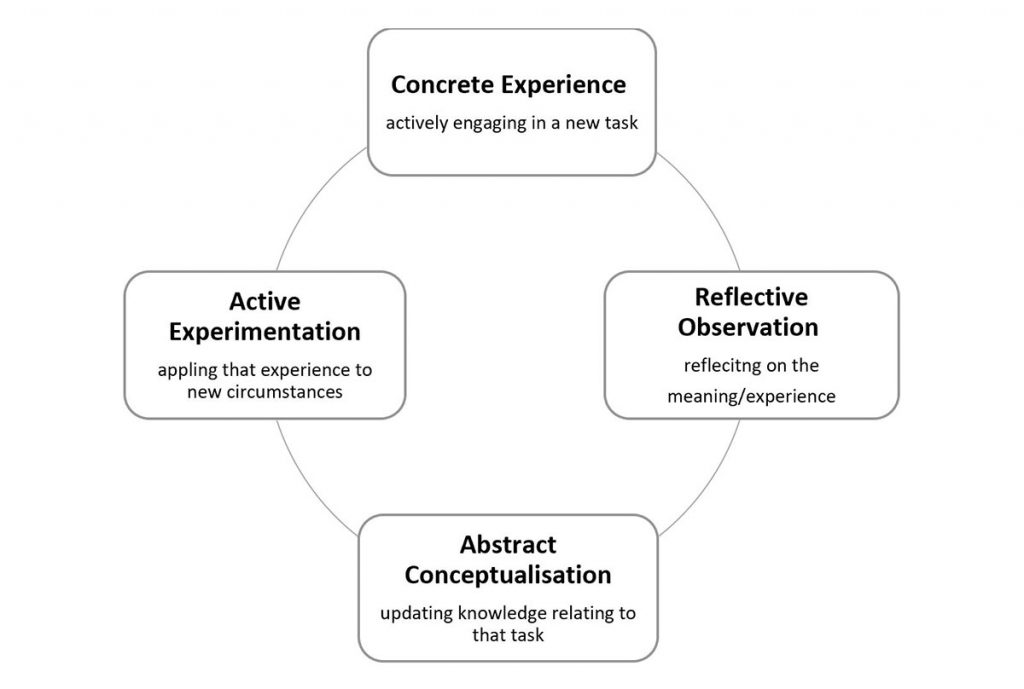
When I design digital skills sessions for either staff or students, I will always include a chance for the participants to have a go themselves, learning by doing, otherwise known as Experiential Learning.
Ideas about learning by doing or experiential learning have been around for a long time. Constructivist theorist John Dewey (1934) is often regarded as one of the key figures influencing thinking in this area, and David Kolb (1974) published his experiential learning cycle.
Results
By making space for hands-on learning, I think it can help to make the sessions more engaging and relevant. It will also improve outcomes for participants by ensuring the attendees are actively participating. However, there are always things to reflect upon to make improvements continually.
Reflection
What?
One of the things I struggle with the most, especially when delivering sessions online, is the balance between how long a demonstration is and setting the participants up for practice tasks.
So What?
I notice that some people try to follow along at the same time as I am demonstrating, and others wait until I have finished. I tend to encourage people to wait until I have finished demonstrating, as I feel this will push the participant into thinking through certain steps themself rather than just copying and improve the likelihood of retaining information. I also feel it is easier to miss steps if you are doing something while someone else is showing you another. However, I feel some people are impatient to try for themselves.
Now what?
Sometimes I experiment with the tempo. For example, I take a couple of steps and then ask them to do the same. Allowing space for questions and going much slower than I might ordinarily. Ultimately, I think it depends on the complexity of the task and the skill level of the participants. Each session needs to be designed individually and reviewed once it’s completed. If you do this, it makes it easier to adjust for the next session.
Evidence
Feedback from the sessions
PG Cert certificate
FHEA certificate
Plans